
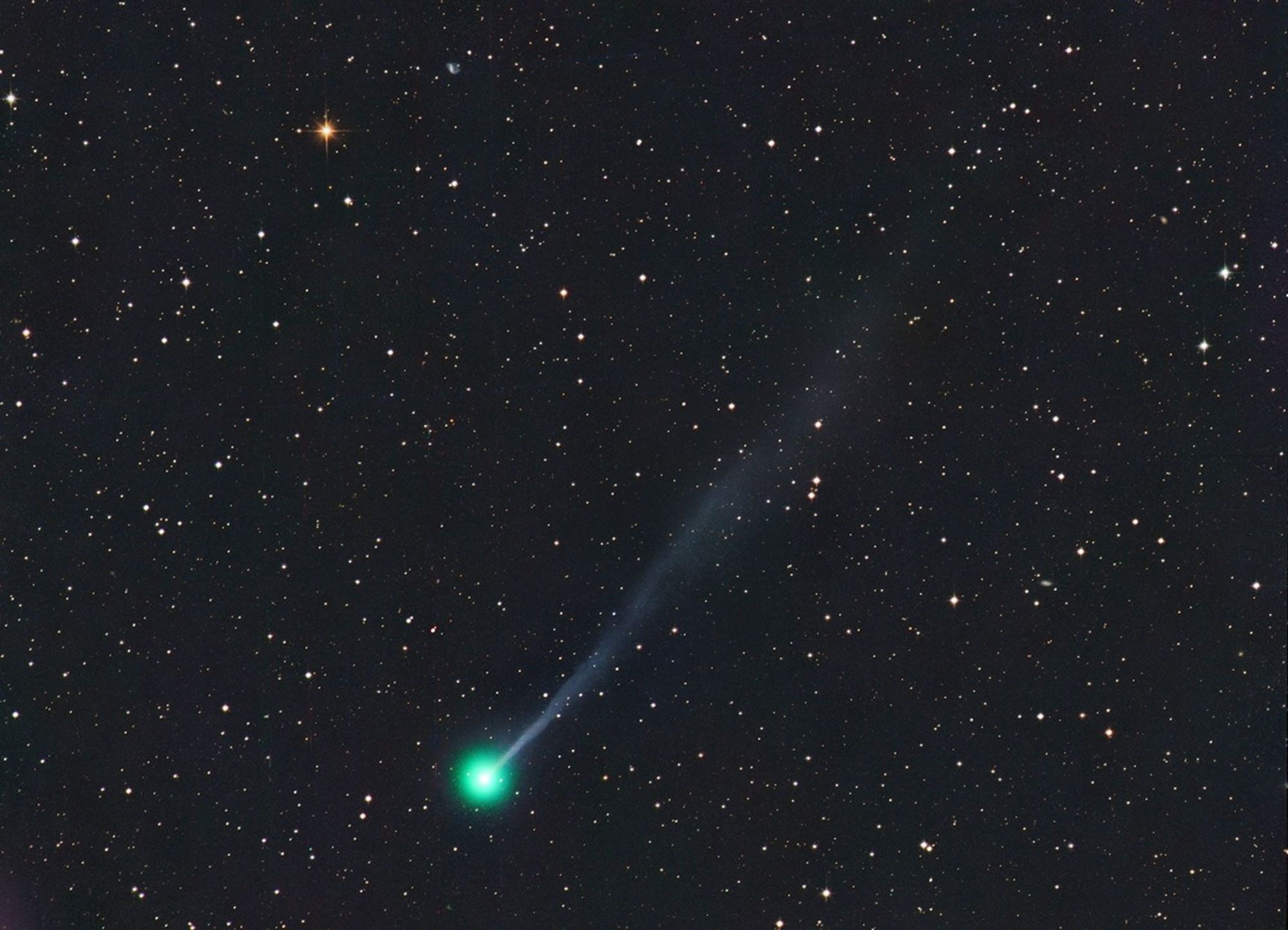
🚀 Live Update: March 28, 2026
C/2025 R3 (PanSTARRS) has maintained its trajectory and is now visible through binoculars in the pre-dawn sky. C/2026 A1 (MAPS) is showing signs of significant outgassing—stay tuned for daylight visibility confirmations!
Two Comets for April 2026
April 2026 is shaping up to be the month of the comets. Two distinct icy visitors are racing toward the Sun, potentially offering a rare opportunity to witness these “dirty snowballs” with the naked eye. If orbital survival and brightness predictions hold, we are in for a historic show.
1. The Daylight Contender: Comet C/2026 A1 (MAPS)
Details of Comet C/2026 A1 (MAPS)
First highlighted in our Yearly Astronomical Events guide, C/2026 A1 (MAPS) is the one to watch.
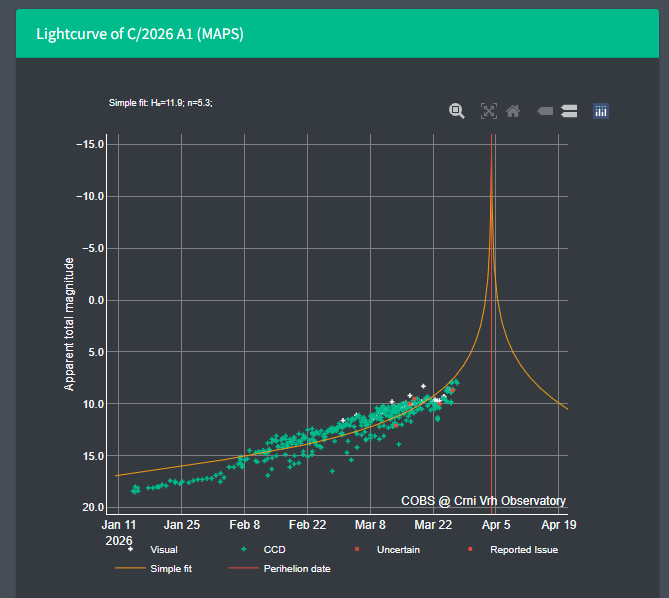
- Peak Visibility: Around April 4th, 2026.
- The “Survival” Factor: Its visibility depends entirely on whether the nucleus survives its intense perihelion (closest approach to the Sun).
- Potential Brightness: Some models (COBS) suggest it could reach a staggering -15 magnitude. If this occurs, the comet would be visible in broad daylight, outshining the full moon.
- Best Viewing: Primarily the Southern Hemisphere, though Northern observers may catch a glimpse low on the horizon.
2. The Northern Favorite: C/2025 R3 (PanSTARRS)
While not as potentially explosive as MAPS, C/2025 R3 (PanSTARRS) is a much more reliable target for those in the Northern Hemisphere.
Details about Comet C/2025 R3 PanSTARRS
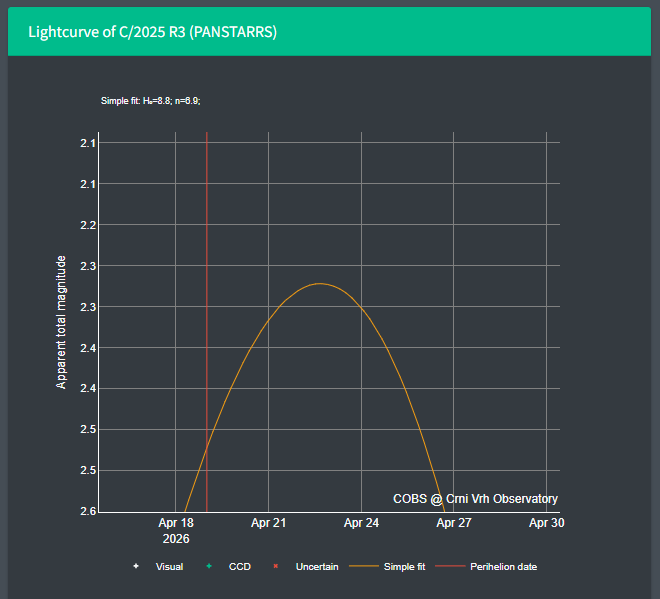
- Peak Visibility: Late April 2026.
- Perihelion Date: April 19, 2026.
- Current Status: As of late March, it sits at a steady +7.0 magnitude.
- Expected Brightness: It is projected to peak at +2.3 magnitude, making it a clear, easy target for the naked eye in dark skies and a stunning subject for astrophotographers.
Gear Up and Get Ready
Whether you are a seasoned astrophotographer or a casual stargazer, April offers a unique window to capture these ancient travelers. Dust off your tripods and find a location with low light pollution.
Stay tuned to this post! We will provide real-time coordinate updates and survival news as these comets approach the Sun.
अप्रैल 2026 के दो धूमकेतु
2026 अप्रैल में दिखेंगे दो अनोखे धूमकेतु: बिना किसी उपकरण के देखने का सुनहरा मौका
अप्रैल 2026 खगोल प्रेमियों के लिए बेहद खास होने वाला है। इस महीने दो धूमकेतु (Comets) सूर्य की ओर बढ़ रहे हैं, जिन्हें हम बिना किसी दूरबीन या विशेष गियर के अपनी आंखों से देख सकेंगे।
1. धूमकेतु C/2026 A1 (MAPS): क्या यह दिन में भी दिखेगा?
जैसा कि हमारे ‘वार्षिक खगोलीय घटनाओं’ के लेख में बताया गया था, C/2026 A1 (MAPS) इस महीने का सबसे बड़ा आकर्षण है।
- कब दिखेगा: 4 अप्रैल 2026 के आसपास।
- विशेषता: यदि यह सूर्य के सबसे करीब (Perihelion) पहुंचकर सुरक्षित रहता है, तो इसकी चमक -15 मैग्नीट्यूड तक जा सकती है। अगर ऐसा हुआ, तो यह दिन के उजाले में भी दिखाई देगा!
- कहाँ से देखें: यह मुख्य रूप से दक्षिणी गोलार्ध (Southern Hemisphere) में साफ दिखेगा, लेकिन उत्तरी गोलार्ध के लोग भी इसकी एक झलक पा सकते हैं।
2. धूमकेतु C/2025 R3 (PanSTARRS)
उत्तरी गोलार्ध (भारत जैसे देशों) के लोगों के लिए C/2025 R3 (PanSTARRS) सबसे बेहतरीन मौका है।
- सबसे अच्छा समय: अप्रैल के अंत में।
- चमक: वर्तमान में इसकी चमक +7.0 है, लेकिन 19 अप्रैल 2026 तक यह +2.3 मैग्नीट्यूड तक पहुँच सकता है, जिससे यह नग्न आंखों से आसानी से दिखाई देगा।
तैयार हो जाइए! चाहे आप एक अनुभवी एस्ट्रो-फोटोग्राफर हों या बस आसमान निहारने के शौकीन, अप्रैल का यह महीना इन प्राचीन अंतरिक्ष यात्रियों को कैमरे में कैद करने का एक अनोखा अवसर दे रहा है। अपने ट्राइपॉड तैयार रखें और ऐसी जगह चुनें जहाँ शहर की रोशनी का प्रदूषण (Light Pollution) कम हो।
इस पोस्ट से जुड़े रहें! जैसे-जैसे ये धूमकेतु सूर्य के करीब पहुँचेंगे, हम आपको इनके सटीक निर्देशांक (Coordinates) और इनके बचने की ताज़ा खबरें (Survival Updates) यहाँ देते रहेंगे।