Category: astro event news

  • बुद्ध पूर्णिमा पर टेलिस्कोप से ‘चंद्र दर्शन’, नैनीताल

    बुद्ध पूर्णिमा पर टेलिस्कोप से ‘चंद्र दर्शन’, नैनीताल

    Written by: Pramod

    नैनीताल: 'शशिशेखर' शिवा के सानिध्य में 266 गुना ज़ूम से निहारें चंद्रमा के क्रेटर; बुद्ध पूर्णिमा पर स्टोनले में विशेष आयोजन

    नैनीताल। सरोवर नगरी में इस वर्ष की बुद्ध पूर्णिमा खगोल प्रेमियों और श्रद्धालुओं के लिए एक अनूठा संगम लेकर आ रही है। आगामी 01 मई 2026 की शाम, 'कॉस्मिकाई' (KOSMIKAI) पहल के तहत तल्लीताल के स्टोनले क्षेत्र में एक विशेष 'चंद्र दर्शन' कार्यक्रम आयोजित किया जा रहा है।

    यह आयोजन स्टोनले रोड स्थित शिव मंदिर (जज कोठी के पास) के प्रांगण में संपन्न होगा। भगवान शिव, जिन्हें 'शशिशेखर' यानी अपने मस्तक पर चंद्रमा को धारण करने वाला कहा जाता है, उनके मंदिर परिसर में चंद्रमा का ऐसा सूक्ष्म अवलोकन अपने आप में आध्यात्मिक और वैज्ञानिक अनुभव का मिश्रण होगा।

    कार्यक्रम की मुख्य विशेषताएं:

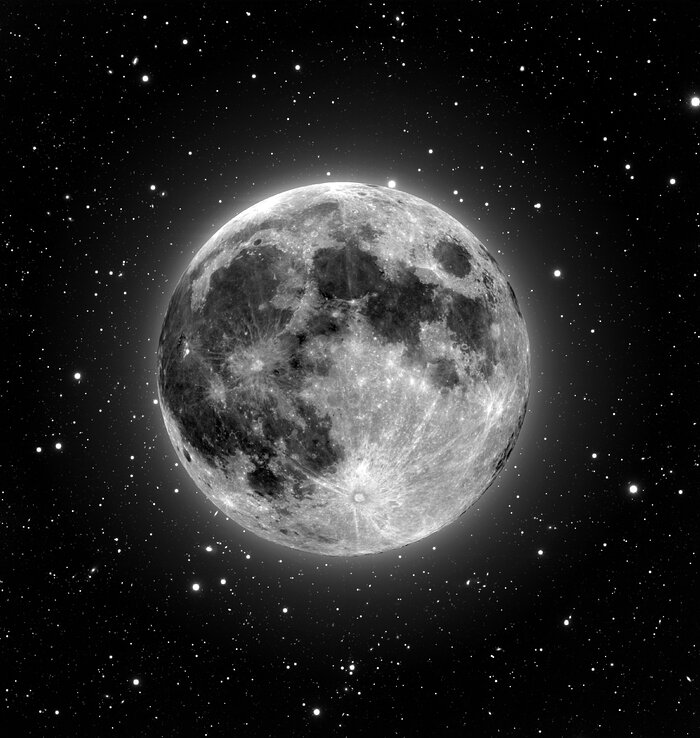
    • चंद्रमा का अभूतपूर्व अवलोकन (266x मैग्निफिकेशन): इस कार्यक्रम का मुख्य आकर्षण 8-इंच सेलेस्ट्रॉन डॉबसनियन स्टारसेंस (8-inch Celestron Dobsonian StarSense) टेलिस्कोप होगा। इस अत्याधुनिक टेलिस्कोप के माध्यम से चंद्रमा को उसकी सामान्य स्थिति से 266 गुना अधिक बड़ा करके दिखाया जाएगा। इतनी उच्च क्षमता के मैग्निफिकेशन से प्रतिभागी चंद्रमा की सतह पर मौजूद पर्वत शृंखलाओं और गहरे क्रेटरों (गड्ढों) को बिल्कुल करीब से देख पाएंगे।
    • खगोल विज्ञान और स्टारगेजिंग: कार्यक्रम के दौरान उपस्थित लोगों को रात्रि आकाश में चमकते ग्रहों और नक्षत्रों की पहचान करने के साथ-साथ उनके पीछे छिपे विज्ञान की जानकारी भी दी जाएगी।
    • एस्ट्रोफोटोग्राफी कार्यशाला: मोबाइल और कैमरों के माध्यम से खगोलीय पिंडों की बेहतरीन तस्वीरें लेने की बारीकियां भी साझा की जाएंगी।

     

    प्रकाश प्रदूषण (Light Pollution) के प्रति जागरूकता: आयोजन के अंत में बढ़ते प्रकाश प्रदूषण पर एक विशेष चर्चा की जाएगी। इसमें बताया जाएगा कि कैसे शहरों की अत्यधिक रोशनी हमारे रात के आकाश को प्रभावित कर रही है। कॉस्मिकाई का यह प्रयास है कि लोगों को 'डार्क स्काई' (अंधेरे आकाश) के प्रति जागरूक किया जाए ताकि नैनीताल के स्वच्छ आकाश की भव्यता को भविष्य के लिए सुरक्षित रखा जा सके।


    स्थान: शिव मंदिर (जज कोठी के पास), स्टोनले रोड, तल्लीताल, नैनीताल

    दिनांक: 01 मई 2026 (बुद्ध पूर्णिमा)

    समय: शाम 07:00 बजे से रात्रि 09:00 बजे तक

    संपर्क: कार्यक्रम के संबंध में अधिक जानकारी प्रमोद सिंह खाती से प्राप्त की जा सकती है।

    ब्रह्मांड की इस दिव्य और वैज्ञानिक यात्रा का हिस्सा बनने के लिए सभी नगरवासियों और पर्यटकों का स्वागत है।
  • Chasing the Guide to Comet C/2025 R3 (PanSTARRS)

    Chasing the Guide to Comet C/2025 R3 (PanSTARRS)

    Chasing the Guide to Comet C/2025 R3 (PanSTARRS)

    Written by: Pramod

    "English"हिन्दी"पहाड़ी

    Chasing the Emerald Glow: A Guide to Comet C/2025 R3 (PanSTARRS)

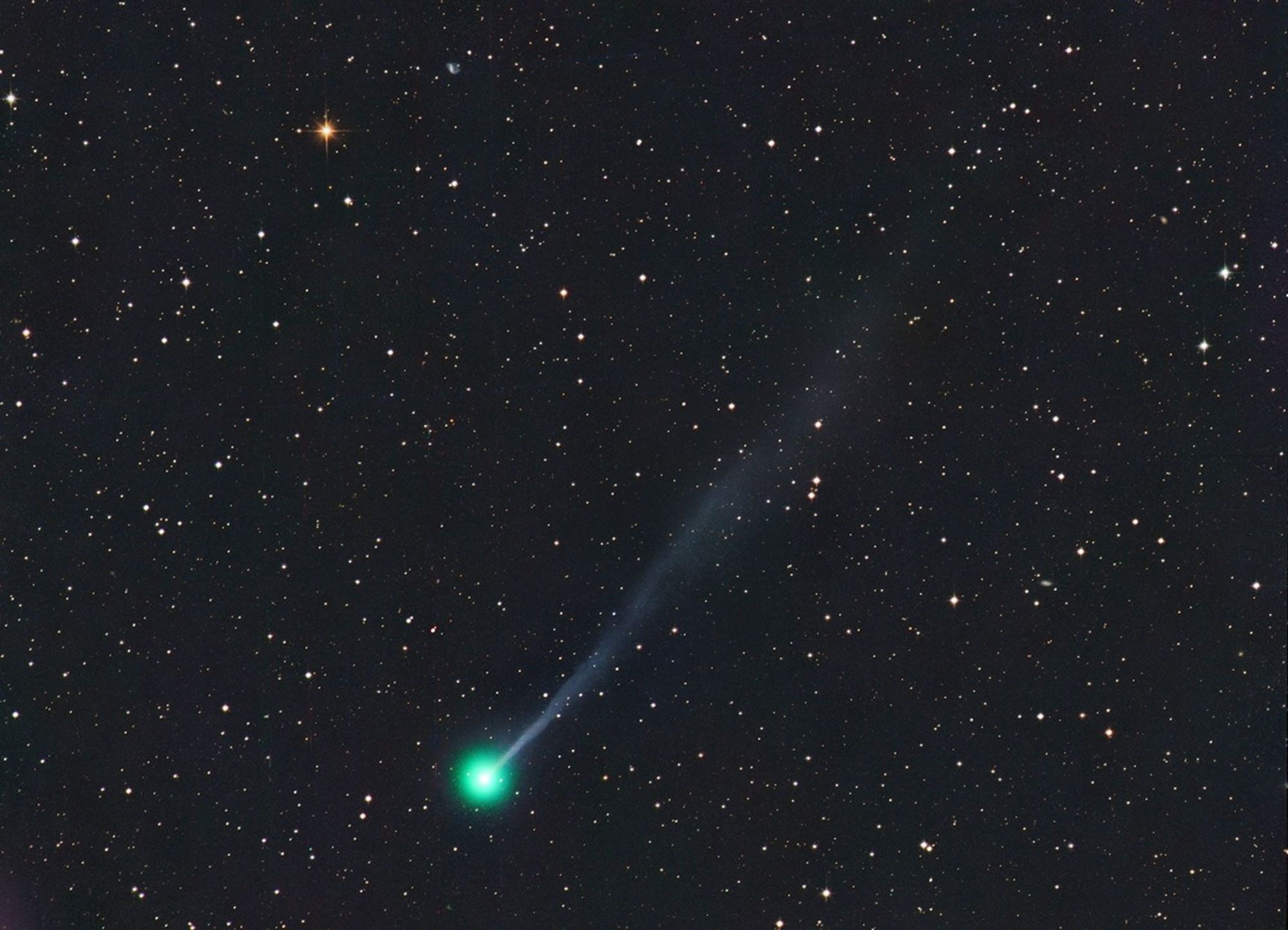
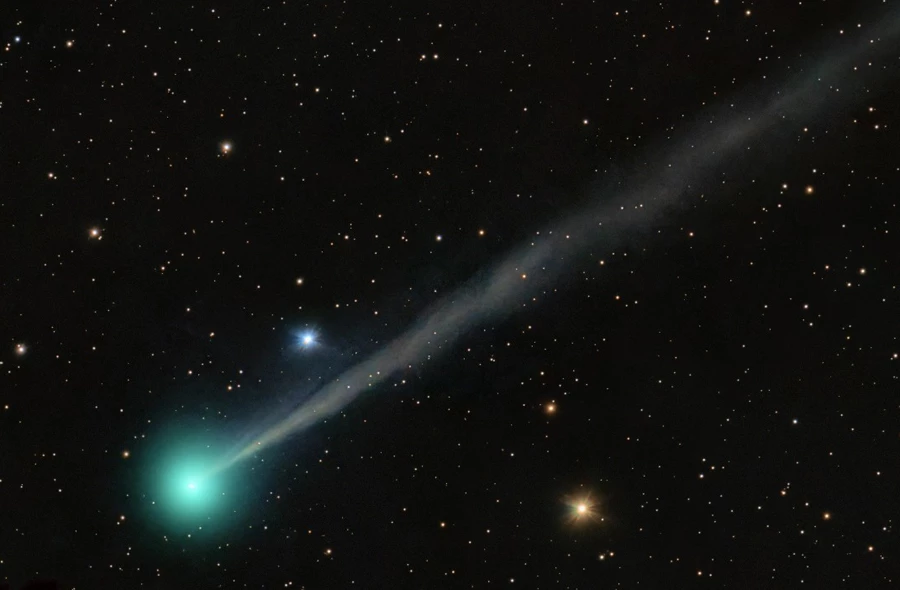
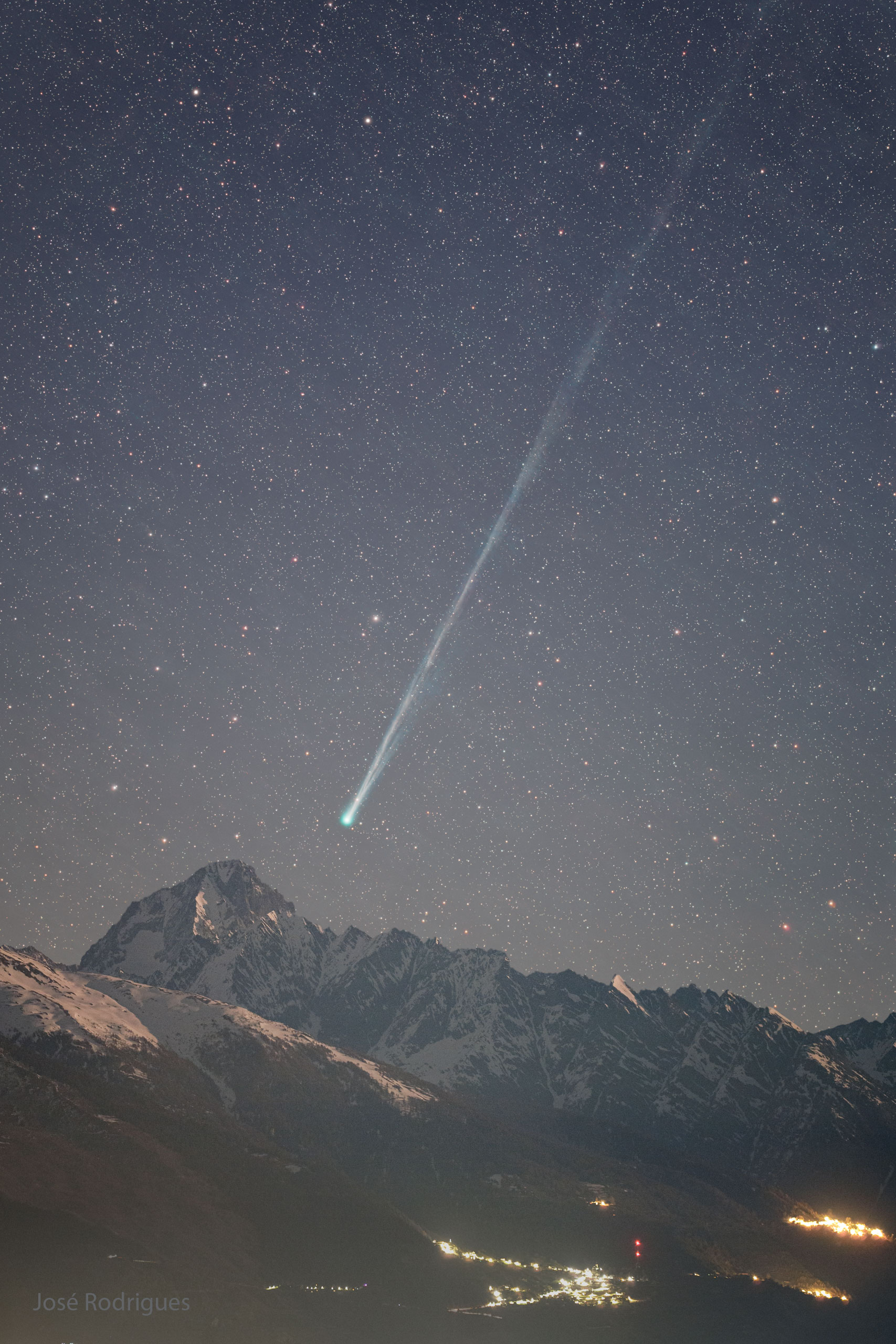
    A rare celestial visitor known as Comet C/2025 R3 (PanSTARRS) is currently gracing our morning skies, offering a once-in-a-lifetime opportunity for observers to witness its distinct "emerald glow". Often called the "green comet," this shedding mountain of dirty ice is rapidly brightening as it makes its first trip to the inner solar system in roughly 170,000 years.

    Discovery and Origin

    This comet was first spotted on September 8, 2025, by the Pan-STARRS 2 telescope located at Haleakala in Hawaii. At the time of its discovery, it was an incredibly faint point of light with a magnitude of 19.8, visible only to professional equipment. It is classified as a long-period comet originating from the extreme edges of our solar system. Interestingly, its orbit is currently hyperbolic, meaning that after it passes the Sun, it may gain enough speed to leave our solar system forever.

    [CREDIT: José Rodrigues | José Rodrigues (@joserodrigues.space) • Instagram photos and videos]

    The Best Time to Watch

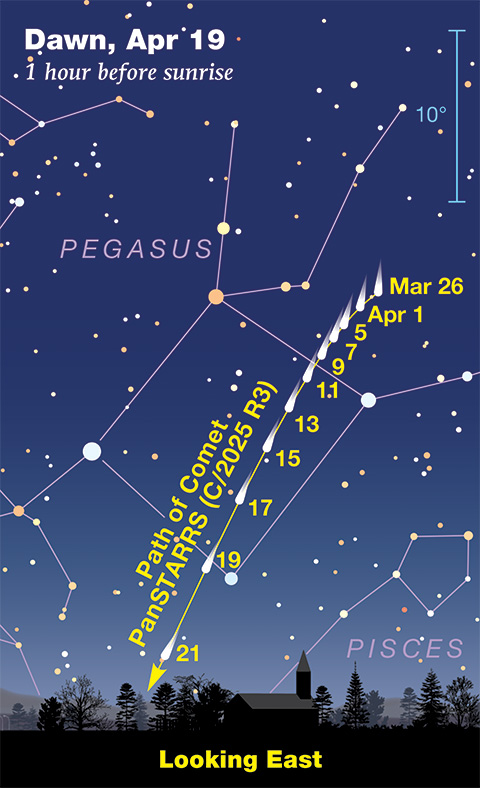
    For those in the Northern Hemisphere, the comet is a morning target. To see it, you must look toward the eastern horizon approximately 90 minutes before sunrise.

    The prime viewing window for this apparition is between April 5 and April 18. After this period, the comet will move too close to the Sun’s intense glare to be easily seen from northern latitudes.

    [CREDIT: Sky & Telescope | Dawn Comet C/2025 R3 (PanSTARRS) May Hold a Surprise – Sky & Telescope]

    Key Dates for Your Calendar

    • April 14: The comet will appear near a delicate 12% waning crescent moon and the planet Mercury.
    • April 17: This is the date of the New Moon, providing the darkest possible skies, which are ideal for spotting the comet's faint dust tail.
    • April 18: The comet will be positioned within 2 degrees of the distant spiral galaxy NGC 7814.
    • April 19 (Perihelion): The comet reaches its closest point to the Sun. It is expected to reach its maximum brightness, potentially hitting magnitude 3, which could make it visible to the naked eye under perfect conditions.
    • April 25–26 (Perigee): The comet will make its closest approach to Earth.

    How to Observe and Capture the Comet

    While the comet may reach naked-eye visibility, experts recommend using 10×50 binoculars to see the diffuse green coma and the developing tail clearly.

    If you wish to photograph the "emerald glow," a DSLR or mirrorless camera on a sturdy tripod is essential. Using a 200–400mm telephoto lens with an ISO setting between 1600 and 6400 can help capture the comet's subtle details. Even smartphones can be used for capture if they are used in conjunction with a telescope or have advanced night-mode capabilities.

    Will It Survive?

    There is a high degree of uncertainty regarding the comet’s physical future. Like other "sungrazing" comets, the intense heat of the Sun could cause it to disintegrate entirely as it passes perihelion. However, if it remains structurally sound, it may put on an even more dramatic show for the Southern Hemisphere in late April and May as it moves away from the Sun.

    धूमकेतु C/2025 R3 (PanSTARRS), जिसे इसकी विशेष चमक के कारण "पन्ने जैसी चमक" (Emerald Glow) या "हरा धूमकेतु" भी कहा जा रहा है, इस समय हमारे सौर मंडल के आंतरिक हिस्से की यात्रा पर है। आम जनता के लिए इस दुर्लभ खगोलीय घटना की पूरी जानकारी नीचे दी गई है:

    खोज और उत्पत्ति

    • खोजकर्ता और स्थान: इस धूमकेतु की खोज 8 सितंबर, 2025 को हवाई के हलेकाला (Haleakala) में स्थित Pan-STARRS 2 टेलिस्कोप द्वारा की गई थी। खोज के समय यह बहुत धुंधला (मैग्निट्यूड 19.8) था।

    • उत्पत्ति: यह एक लंबी अवधि का धूमकेतु है जो हमारे सौर मंडल के सुदूर बाहरी किनारों से आ रहा है। नासा के अनुसार इसे एक 'हाइपरबोलिक धूमकेतु' के रूप में वर्गीकृत किया गया है, जिसका अर्थ है कि यह सूर्य के पास से गुजरने के बाद शायद हमेशा के लिए हमारे सौर मंडल को छोड़ देगा।

    [CREDIT: José Rodrigues | José Rodrigues (@joserodrigues.space) • Instagram photos and videos]

    कक्षा और समय (Orbital Details)

    • पेरिहेलियन (सूर्य के सबसे करीब): यह धूमकेतु 19 अप्रैल, 2026 को सूर्य के सबसे निकटतम बिंदु पर होगा।

    • पृथ्वी के सबसे करीब: यह 25-26 अप्रैल, 2026 के आसपास पृथ्वी के सबसे करीब से गुजरेगा।

    • परिक्रमा अवधि: वैज्ञानिकों का अनुमान है कि यह लगभग 1,70,000 वर्षों में एक बार आंतरिक सौर मंडल में वापस आता है।

    देखने के अवसर (Viewing Opportunities)

    [CREDIT: Sky & Telescope | Dawn Comet C/2025 R3 (PanSTARRS) May Hold a Surprise – Sky & Telescope]

    नैनीताल और उत्तरी गोलार्ध के अन्य स्थानों से देखने के लिए मुख्य विवरण निम्नलिखित हैं:

    • समय और दिशा: इसे सुबह के आकाश (Morning Sky) में सूर्योदय से लगभग 90 मिनट पहले देखा जा सकता है। आपको पूर्वी क्षितिज (Eastern Horizon) की ओर देखना होगा।

    • सबसे अच्छा समय: देखने का सबसे अनुकूल समय 5 अप्रैल से 18 अप्रैल के बीच है। 19 अप्रैल के बाद, यह सूर्य की तेज रोशनी में डूब जाएगा और उत्तरी गोलार्ध से देखना बहुत मुश्किल हो जाएगा।

    • दृश्यता: यह वर्तमान में तेजी से चमक रहा है और 19 अप्रैल के आसपास इसकी चमक मैग्निट्यूड 3 तक पहुँच सकती है, जिससे यह अंधेरे आसमान में नग्न आंखों से भी दिखाई दे सकता है।

    तारीख-वार महत्वपूर्ण घटनाएं (Key Dates)

    • 14 अप्रैल: धूमकेतु चंद्रमा के 12% पतले अर्धचंद्राकार रूप और बुध ग्रह के पास दिखाई देगा।

    • 17 अप्रैल: इस दिन अमावस्या (New Moon) है, जिससे आकाश सबसे अधिक अंधेरा होगा, जो धूमकेतु की धुंधली पूंछ देखने के लिए सबसे उपयुक्त समय है।

    • 18 अप्रैल: यह धूमकेतु 'Pegasus' तारामंडल में आकाशगंगा NGC 7814 के बहुत करीब (2 डिग्री के भीतर) होगा।

    • 19 अप्रैल: पेरिहेलियन के दिन, यह चमकीले तारे Algenib के पास दिखाई देगा।

    देखने और कैप्चर करने के टिप्स

    • विशेषज्ञों के अनुसार, हालांकि यह नग्न आंखों से दिख सकता है, लेकिन 10×50 दूरबीन (Binoculars) का उपयोग करने पर इसकी हरी चमक और पूंछ कहीं अधिक स्पष्ट दिखाई देगी।

    • यदि आप इसे कैप्चर करना चाहते हैं, तो DSLR कैमरे (ISO 1600–6400) या उन्नत नाइट मोड वाले स्मार्टफोन का उपयोग ट्राइपॉड के साथ करें।

    सावधानी: धूमकेतुओं का भविष्य अनिश्चित होता है। सूर्य की अत्यधिक गर्मी के कारण यह टूट भी सकता है या अपनी चमक बिखेरते हुए सौर मंडल से बाहर निकल सकता है।

    धूमकेतु C/2025 R3 (PanSTARRS), जैकै यकै खास चमकक वजह ले "पन्ने जैस चमक" (Emerald Glow) या "हरा धूमकेतु" लै क्यून छन, ईं बखत हमार सौर मंडलक भितरली यात्रा पर छु। आम लोगां क लीजी ईं दुर्लभ खगोलीय र्टनाक परूी जानकारी तल दियैं छ:

    खोज और उत्पत्ति

    • खोजकर्ता और ठौर (Place): ईं धूमकेतुक खोज 8 सितंबर, 2025 के हवाई क हलेकाला (Haleakala) में स्थित Pan-STARRS 2 टेलिस्कोप ले करि छी। खोजक बखत यो बहुत धुंधुल (मैग्निट्यूड 19.8) छी।

    • उत्पत्ति: यो एक लम्प्बी अवकधक धूमकेतु छु जो हमार सौर मंडलक बहुत भैर बटी ऊणो छु। नासा क अनसुार यकै 'हाइपरबोलिक धूमकेतु' क्यून छन, जैक मतलब यो भयो कि यो सूरजक पास हैक जाबेर शायद हमेशाक लीजी हमार सौर मंडल कैं छोकड़ दलेो।

    [CREDIT: José Rodrigues | José Rodrigues (@joserodrigues.space) • Instagram photos and videos]

    कक्षा और बखत (Orbital Details)

    • पेरिहेलियन (सूरजक सबसे पास): यो धूमकेतु 19 अप्रैल, 2026 के सूरजक सबसे पास रौलो।

    • धरतीक सबसे पास: यो 25-26 अप्रैल, 2026 क आसपास धरतीक सबसे पास हैक जालो।

    • परिक्रमा अवकध: वैज्ञानकन को अनमुान छु कि यो लगभग 1,70,000 सालन में एक बार सौर मंडलक भित्र ऊंछ।

    [CREDIT: Sky & Telescope | Dawn Comet C/2025 R3 (PanSTARRS) May Hold a Surprise – Sky & Telescope]

    देखणक मौका (Viewing Opportunities)

    नैनीताल और उिरी गोलार्धक और ठौरन बटी देखणक लीजी मखु्य जानकारी यो छ:

    • बखत और कदशा: यकै रात्त्तै (Morning Sky) में सूरज ऊण है लगभग 90 मिनट पैल देखि सकिंछ। तुमकै पूरब (Eastern Horizon) और देखण रौलो।

    • सबसे भल बखत: देखणक लीजी सबसे भल बखत 5 अप्रैल है 18 अप्रैल क बीच छु। 19 अप्रैलक बाद यो सूरजक तेज र्ाम (light) में दब जालो और उिरी गोलार्ध बटी देखण बहुत ककठन है जालो।

    • दृश्यता: यो आल्ले (now) बहुत तेजी ले चमकण रौ, और 19 अप्रैलक आसपास यकै चमक मैग्निट्यूड 3 तक है सकिंछ, जै ले यो अन्यार अगास (dark sky) में बिना क्ये दूरबीनक (naked eyes) लै देखि सकिंछ।

    तारीख-वार खास र्टना (Key Dates)

    • 14 अप्रैल: धूमकेतु चंद्रमा और बुध ग्रहक पास दिखाई देलो।

    • 17 अप्रैल: ईं कदन अमावस्या (New Moon) छु, जै ले अगास बहुत अन्यार रौलो, जो धूमकेतुक धुंधुल पँूछ देखणक लीजी सबसे भल बखत छु।

    • 18 अप्रैल: यो धूमकेतु 'Pegasus' तारामंडल में आकाशगंगा NGC 7814 क बहुत पास रौलो।

    • 19 अप्रैल: पेरिहेलियन क कदन यो चकमकले तारे Algenib क पास देखि सकिंछ।

    देखण और कैप्चर करणक टप्स

    • ममभज्ञन क अनसुार, चाह ेयो आँखन ले देखि सकिंछ, पण 10×50 दूरबीन (Binoculars) क प्रयोग करण पर यकै हरी चमक और पूँछ ज्यादा साफ देखि सकिंछ।

    • यदु तुम यकै फोटो खींचण चाहछा, त DSLR कैमरे या भल नाइट मोड वाल स्मार्टफोन क प्रयोग ट्राइपॉड दगड़ करिया।

    सावधानी: धूमकेतुन को भकवष्य क्ये पत्त नि छु (uncertain)। सूरजक ज्यादा र्ाम (heat) क वजह ले यो टूट लै सकंछ या आपण चमक कबखेर बेर सौर मंडल है भैर कनकल सकंछ।

  • Comet C/2025 R3 (PanSTARRS) and the Artificial Intruder

    Comet C/2025 R3 (PanSTARRS) and the Artificial Intruder

    Written by: Pramod
    English 🇬🇧हिन्दी 🇮🇳पहाड़ी 🏔️

    Comet C/2025 R3 (PanSTARRS) and the Artificial Intruder

    On the morning of April 14, 2026, our team at Kosmikai successfully captured Comet C/2025 R3 from Himalaya Darshan, Nainital. We arrived at the site around 3:30 AM, equipped with the Kosmikai telescope, DSLRs, and smartphones, while also conducting visual observations through binoculars.

    According to COBS, the comet currently sits at a magnitude of 4.4. While it is only faintly visible to the naked eye, a good pair of binoculars clearly reveals its distinct green glow. Despite the challenge of an 11% waning crescent moon rising alongside the comet and brightening the sky, we managed to secure several frames.

    [Photo]

    As sunrise approached and the comet began to fade into the morning light, I took a few final shots by attaching my DSLR to the telescope. The most difficult part was locating a non-visible object at a 1200mm focal length; at that magnification, the field of view is roughly the size of the Moon, making it incredibly hard to find an object invisible to the eye. It felt like searching for a specific star through a very long, narrow tube. Fortunately, we were able to track it manually. Although the high ISO settings resulted in some noise, post-processing helped make the images presentable.

    One striking observation was the sheer number of satellites—hundreds of them—streaking across the sky. This significantly complicates astrophotography and raises a serious concern: the rapid advancement of commercial space missions and tourism is hampering our ability to view the cosmos from Earth.

    [Photo]

    In this image, you can see the comet's green coma next to a bright streak of light—an artificial satellite crossing our narrow field of view. Capturing this intersection between a satellite and a comet with an orbital period of nearly 170,000 years is a rare, if bittersweet, moment. These satellites disrupt Earth-based observations for both amateur astronomers and the global scientific community.

    With startups like Reflect Orbital planning to deploy 50,000 giant space mirrors to illuminate Earth at night, the preservation of our dark skies is at a critical crossroads. I hope we can continue to enjoy the natural beauty of the night sky before it becomes permanently too bright.

    धूमकेतु C/2025 R3 (PanSTARRS) और कृत्रिम घुसपैठिया

    14 अप्रैल 2026 की सुबह, 'कॉस्मिकई' (Kosmikai) की हमारी टीम ने हिमालय दर्शन, नैनीताल से धूमकेतु C/2025 R3 को सफलतापूर्वक कैमरे में कैद किया। हम सुबह करीब 3:30 बजे वहां पहुंचे। हमारे पास कॉस्मिकई टेलिस्कोप, DSLR और स्मार्टफोन थे, साथ ही हमने दूरबीन (binoculars) के जरिए भी इसका अवलोकन किया।

    COBS के अनुसार, वर्तमान में इस धूमकेतु की चमक (magnitude) लगभग 4.4 है। हालांकि यह नग्न आंखों से केवल धुंधला ही दिखाई देता है, लेकिन एक अच्छी दूरबीन से इसकी स्पष्ट हरी चमक को आसानी से देखा जा सकता है। 11% घटते हुए चंद्रमा (waning crescent moon) के धूमकेतु के साथ उदय होने और आसमान में उसकी रोशनी फैलने की चुनौती के बावजूद, हम इसकी कुछ तस्वीरें लेने में सफल रहे।

    [फोटो]

    जैसे-जैसे सूर्योदय करीब आया और धूमकेतु सुबह की रोशनी में ओझल होने लगा, मैंने अपने DSLR को टेलिस्कोप से जोड़कर कुछ अंतिम शॉट्स लिए। सबसे कठिन काम 1200mm की फोकल लेंथ पर एक ऐसी वस्तु को खोजना था जो आंखों से दिखाई नहीं दे रही थी। इतनी अधिक मैग्निफिकेशन पर 'फील्ड ऑफ व्यू' (दृश्य क्षेत्र) लगभग चंद्रमा के आकार के बराबर ही होता है, जिससे किसी अदृश्य वस्तु को ढूंढना बेहद मुश्किल हो जाता है। यह एक लंबी और संकरी नली के जरिए किसी विशेष तारे को खोजने जैसा था। सौभाग्य से, हम इसे मैन्युअल रूप से ट्रैक करने में सफल रहे। हालांकि हाई ISO सेटिंग्स के कारण तस्वीरों में कुछ 'नॉइज़' (noise) थी, लेकिन सॉफ्टवेयर में पोस्ट-प्रोसेसिंग के बाद वे साझा करने योग्य बन गईं।

    एक चौंकाने वाला अनुभव यह था कि आसमान में सैकड़ों उपग्रह (satellites) गुजर रहे थे। यह खगोल फोटोग्राफी (astrophotography) को बहुत जटिल बना देता है और एक गंभीर चिंता पैदा करता है: वाणिज्यिक अंतरिक्ष मिशनों और अंतरिक्ष पर्यटन की बढ़ती होड़ पृथ्वी से ब्रह्मांड को निहारने की हमारी क्षमता को बाधित कर रही है।

    [फोटो]

    इस तस्वीर में आप धूमकेतु की हरी चमक (green coma) के बगल में प्रकाश की एक लकीर देख सकते हैं—यह और कुछ नहीं बल्कि हमारे संकीर्ण दृश्य क्षेत्र को पार करता हुआ एक कृत्रिम उपग्रह है। लगभग 1,70,000 वर्षों की कक्षीय अवधि वाले दुर्लभ धूमकेतु और एक उपग्रह के इस मिलन को कैद करना एक अनोखा, लेकिन थोड़ा दुखद क्षण है। ये उपग्रह न केवल हमारे जैसे शौकिया खगोलविदों के लिए, बल्कि वैज्ञानिक समुदाय के लिए भी पृथ्वी-आधारित अवलोकनों में बड़ी बाधा बन रहे हैं।

    'रिफ्लेक्ट ऑर्बिटल' (Reflect Orbital) जैसे स्टार्टअप्स, जो रात में पृथ्वी के कुछ हिस्सों को रोशन करने के लिए अंतरिक्ष में 50,000 विशाल दर्पण तैनात करने की योजना बना रहे हैं, हमारे 'डार्क स्काई' (dark sky) के अस्तित्व के लिए बड़ा खतरा हैं। उम्मीद है कि हम रात के आकाश की इस प्राकृतिक सुंदरता का आनंद तब तक ले पाएंगे, जब तक कि यह कृत्रिम रोशनी से पूरी तरह धुंधला न हो जाए।

    धूमकेतु C/2025 R3 (PanSTARRS) और बनावटी (कृत्रिम) घुसपैठिया क जानकारी कुमाऊँनी भाषा में तल दियैं छ:

    14 अप्रैल 2026 क रात्त्तै (morning), 'कॉस्मकई' (Kosmikai) की हमार टीम ले हिमालय दर्शन, नैनीताल बटी धूमकेतु C/2025 R3 कैं सफलतापूर्वक कैमरे में कैद करी. हम रात्त्तै लगभग 3:30 बजे उतला पुकज गयां. हमार दगड़ कॉस्मकई टेलिस्कोप, DSLR और स्मार्टफोन छी, और हमुल दूरबीन (binoculars) क जररये ले यकै दखेण-परखण करी.

    COBS क अनसुार, आल्ले ईं धूमकेतुक चमक (magnitude) लगभग 4.4 छु. चाह ेयो आँखन ले कवेल धुंधुल देखिंछ, पण एक भल दूरबीन ले यकै साफ हरी चमक आसानी ले देखि सकिंछ. 11% र्टद जून (waning crescent moon) क धूमकेतु क दगड़ ऊण और आगास में ऊईं उजालो फैकण क चनुौती क बावजदू लै, हम यकै कुछ फोटो खींचण में सफल रयां.

    [फोटो]

    जस्यां-जस्यां सूरज ऊण क बखत पास आयो और धूमकेतु रात्त्तै क उजालो में ओझल हुण लागो, मैंल आपण DSLR कैं टेलिस्कोप दगड़ जोड़ बेर कुछ आखरी फोटो खींची. सबसे ककठन (difficult) काम 1200mm क फोकल लेंथ पर ककसी यैसी वस्त ुकैं खोजण छी जो आँखन ले नि देखिण छी. इतुक ज्यादा मैग्नीफिकेशन पर 'फील्ड ऑफ व्यू' (दृश्य क्षेत्र) कवेल जून क आकार क बराबर ऊंछ, जै ले ककसी अनदखेी वस्त ुकैं खोजण भौत मकु्शकल है जांछ. यो एक लम्प्बी और कँकुड़ी (narrow) नली क जररये ककसी खास तारे कैं खोजण जैस छी. भल भयो कक हम यकै आपण हाथन ले (manually) ट्रैक करण में सफल रयां. चाह ेISO ज्यादा हुणक वजह ले फोटोन में कुछ 'नॉइज़' (noise) छी, पण सॉफ्टवेयर में काम करण क बाद ऊँ साझा करण लायक बकण गई।

    एक अचरज करणी बात यो छी कक आगास (sky) में सैकड़ों उपग्रह (satellites) जांण रया छी. यो खगोल फोटोग्राफी कैं भौत मकु्शकल बणै दलेो और एक ठुल कचंता पैदा करंुछ: व्यापाररक अंतरिक्ष कमशन और अंतरिक्ष पर्यटन क बढ़दी होड़ धरती बटी ब्रह्माण्ड कैं देखण क हमार हकमत कैं रोकण रई छ.

    [फोटो]

    ईं फोटो में तुम धूमकेतुक हरी चमक (green coma) क ककनार उजालो क एक लकीर देखि सकछा—यो क्ये लै नि, बस हमार कँकुड़ी नजर कैं पार करंुछ एक बनावटी उपग्रह छु. लगभग 1,70,000 सालन क परिक्रमा बखत वाल ईं दुर्लभ धूमकेतु और एक उपग्रह क यो कमलन एक अनठूो, पण थोड़ा दखुी (sad) कदन (moment) छु. ये उपग्रह नि कवेल हमार जैस खगोल प्रेममयन क लीजी, पण वैज्ञानकन क लीजी लै अगास देखण में ठुल बाधा बणण रयां छन.

    'रिफ्लेक्ट ऑर्बिटल' (Reflect Orbital) जैस स्टार्टअप, जो रात में धरतीक कुछ हिस्सां कैं चमकुण क लीजी अंतरिक्ष में 50,000 ठुल ऐण (mirrors) लगुाण क योजना बणाण रयां छन, हमार 'डार्क स्काई' क लीजी ठुल खतरो छन. आस छ कक हम रात क अगास क ईं प्राकृकतक सदुरंता क आनंद तब तक ले सकूं, जब तक यो बनावटी उजालो ले परूी तरह धुंधुल नि है जा.

  • Spectacular Comet C/2026 A1 (MAPS) Observing Guide

    Spectacular Comet C/2026 A1 (MAPS) Observing Guide

    “They are calling it a sungrazer—a comet that passes very near to the Sun and if it survives, may be visible in broad daylight. So, what is the likelihood of Comet C/2026 A1 (MAPS) actually becoming a daylight comet?

    More about Discovery

    ☄️ Comet Profile: C/2026 A1 (MAPS)

    Comet C/2026 A1 MAPS

    Credit: Michael Jäger & Gerald Rhemann
    Source: NASA

    Full Name
    C/2026 A1 (MAPS)
    Discoverer
    MAPS (Mauna Kea) Survey
    Comet Type
    Near-Parabolic
    Discovered
    January 2026
    Closest to Sun
    April 04, 2026
    Closest to Earth
    April 05, 2026
    Current Mag
    ~7.4 (Brightening) Check Live Brightness ↗

    *Reference: Latest observation data via COBS Database (Object 2688).

    KOSMIKAI Observation Terminal

    Target: C/2026 A1 (MAPS)

    HELIOCENTRIC PERSPECTIVE

    NASA Orbit Planner

    View from the Sun’s Center. Tracks the 3D trajectory and the “hairpin turn” around the solar core.

    OPEN JPL ORBIT VIEW 🛰️
    OBJECT ID C/2026 A1 (MAPS)
    ENGINE NASA JPL
    TOPOCENTRIC PERSPECTIVE

    Live Sky Tracker

    View from Your Location. Essential for actual observation, altitude, and azimuth positioning.

    OPEN SKY-MAP 🔭
    OBJECT ID C/2026 A1 (MAPS)
    ENGINE THE SKY LIVE

    COMET DATA

    C/2026 A1 (MAPS)
    PREDICTED (NASA)
    model prediction (not observed)
    OBSERVED (LATEST)
    7.0
    🔵 NASA/JPL 🟡 COBS

    Comet C/2026 A1 (MAPS) – Luminosity Trend

    READY
    INITIATING NASA DATA LINK…
    Source: NASA/JPL SSD (↑) Higher = Brighter

    Observer's Verdict & Forecast

    RATING ★★★★★
    BEST VIEW IN Southern Hemisphere (Primary), with good location can be visible from the Northern Hemisphere
    VIEWING REQ. Binoculars / Unaided Eyes
    CAPTURING REQ. Tripod + Long Exposure
    UNAIDED EYE? YES (From April 1) Expected
    VISIBLE IN INDIA YES (Challenging / Low Horizon)
    Best Viewing Window:
    March 28- April 02 & after April 04 (if survives) (after sunset 19:15 - 20:30 IST)
    Moon Condition:
    Full Moon on April 2. Sky contrast improves significantly after April 5. (Check Moon Phases)
    Prediction by BoltiPhoto: "Good to observe, but most probably it will disintegrate. Moonlight is also interfering with it before perihelion. If it survives after perihelion, it will give a show to us. Remember, comets are very unpredictable and amazing if they survive the extreme close pass of the sun."

    Sky Navigation Guide

    DATE: LOADING...
    Nainital Horizon View
    ARIES CETUS
    VENUS
    C/2026 A1 (MAPS)
    SW (225°) WSW (247°) WEST (270°) WNW (292°)
    Real-Time Altitude
    12.0°
    Observation Window
    Standby
    NOTE: Conceptual model for general idea. For exact live coordinates, see:
    Stellarium Web | The Sky Live

    Sky Navigation Guide

    INITIATIVE: KOSMIKAI | NAINITAL, UK
    DATE: --/--/----
    Primary Direction
    W-SW
    West-Southwest
    ALTITUDE 5° — 12° (Very Low)
    CONSTELLATION Cetus / Pisces
    TIME WINDOW Sunset + 45 Mins
    🔭 General Observing Tip: To spot the comet, prioritise a location with a perfectly clear, flat West horizon. Go to a peak if you can. Use "Averted Vision" to help your eyes detect the faint glow of the tail against the twilight sky.
    📸 Capturing the Comet (Bolti Photo Advice):
    Smartphone: Use 'Night Mode'/Manual on a tripod. Set focus to infinity and exposure to 3-5 seconds. Tough but possible.
    DSLR/Mirrorless: Start with Wide-angle lens (max aperature). Shutter speed: 10s if at 18mm on APSC ISO 800-1600, can decrease if the image is overexposed. Focus Manual and at Infinity. If you spot the comet, put it at the centre of the frame, then zoom it to take more photos.
    K O S M I K A I

  • Dual Comets in April 2026: A Rare Celestial Double Feature

    Dual Comets in April 2026: A Rare Celestial Double Feature

    English हिंदी

    🚀 Live Update: March 28, 2026

    C/2025 R3 (PanSTARRS) has maintained its trajectory and is now visible through binoculars in the pre-dawn sky. C/2026 A1 (MAPS) is showing signs of significant outgassing—stay tuned for daylight visibility confirmations!

    Two Comets for April 2026

    April 2026 is shaping up to be the month of the comets. Two distinct icy visitors are racing toward the Sun, potentially offering a rare opportunity to witness these “dirty snowballs” with the naked eye. If orbital survival and brightness predictions hold, we are in for a historic show.

    1. The Daylight Contender: Comet C/2026 A1 (MAPS)

    Details of Comet C/2026 A1 (MAPS)

    First highlighted in our Yearly Astronomical Events guide, C/2026 A1 (MAPS) is the one to watch.

    • Peak Visibility: Around April 4th, 2026.
    • The “Survival” Factor: Its visibility depends entirely on whether the nucleus survives its intense perihelion (closest approach to the Sun).
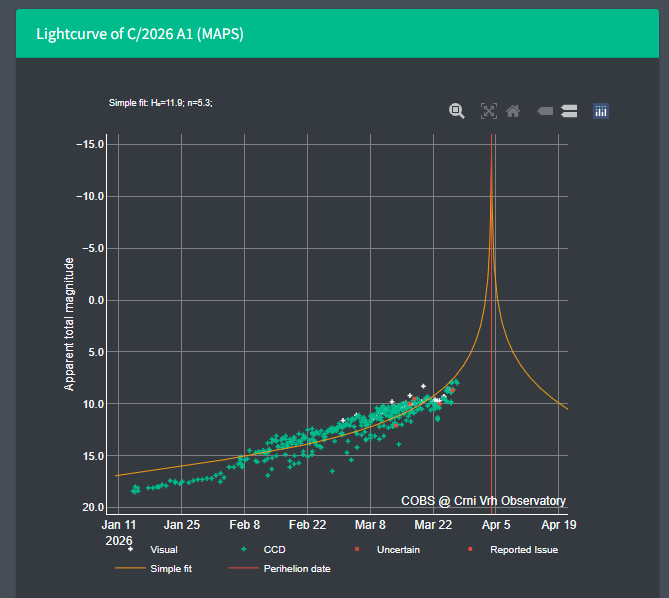
    • Potential Brightness: Some models (COBS) suggest it could reach a staggering -15 magnitude. If this occurs, the comet would be visible in broad daylight, outshining the full moon.
    • Best Viewing: Primarily the Southern Hemisphere, though Northern observers may catch a glimpse low on the horizon.

    2. The Northern Favorite: C/2025 R3 (PanSTARRS)

    While not as potentially explosive as MAPS, C/2025 R3 (PanSTARRS) is a much more reliable target for those in the Northern Hemisphere.

    Details about Comet C/2025 R3 PanSTARRS

    • Peak Visibility: Late April 2026.
    • Perihelion Date: April 19, 2026.
    • Current Status: As of late March, it sits at a steady +7.0 magnitude.
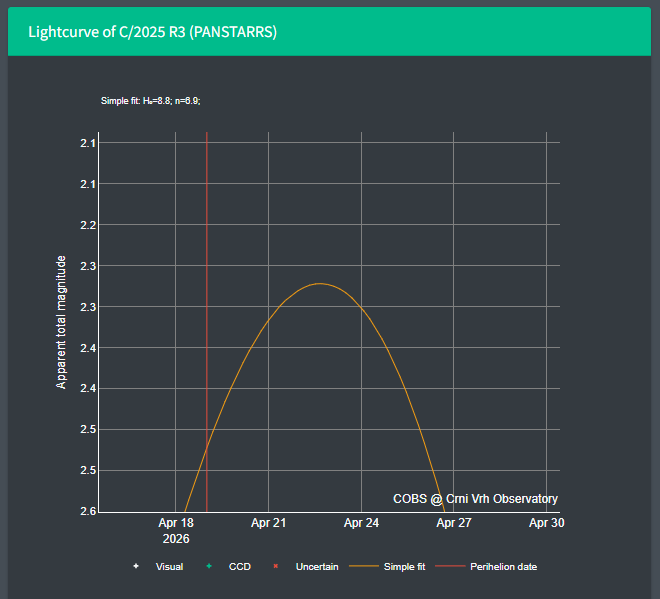
    • Expected Brightness: It is projected to peak at +2.3 magnitude, making it a clear, easy target for the naked eye in dark skies and a stunning subject for astrophotographers.

    Gear Up and Get Ready

    Whether you are a seasoned astrophotographer or a casual stargazer, April offers a unique window to capture these ancient travelers. Dust off your tripods and find a location with low light pollution.

    Stay tuned to this post! We will provide real-time coordinate updates and survival news as these comets approach the Sun.


    अप्रैल 2026 के दो धूमकेतु

    2026 अप्रैल में दिखेंगे दो अनोखे धूमकेतु: बिना किसी उपकरण के देखने का सुनहरा मौका

    अप्रैल 2026 खगोल प्रेमियों के लिए बेहद खास होने वाला है। इस महीने दो धूमकेतु (Comets) सूर्य की ओर बढ़ रहे हैं, जिन्हें हम बिना किसी दूरबीन या विशेष गियर के अपनी आंखों से देख सकेंगे।

    1. धूमकेतु C/2026 A1 (MAPS): क्या यह दिन में भी दिखेगा?

    जैसा कि हमारे ‘वार्षिक खगोलीय घटनाओं’ के लेख में बताया गया था, C/2026 A1 (MAPS) इस महीने का सबसे बड़ा आकर्षण है।

    • कब दिखेगा: 4 अप्रैल 2026 के आसपास।
    • विशेषता: यदि यह सूर्य के सबसे करीब (Perihelion) पहुंचकर सुरक्षित रहता है, तो इसकी चमक -15 मैग्नीट्यूड तक जा सकती है। अगर ऐसा हुआ, तो यह दिन के उजाले में भी दिखाई देगा!
    • कहाँ से देखें: यह मुख्य रूप से दक्षिणी गोलार्ध (Southern Hemisphere) में साफ दिखेगा, लेकिन उत्तरी गोलार्ध के लोग भी इसकी एक झलक पा सकते हैं।

    2. धूमकेतु C/2025 R3 (PanSTARRS)

    उत्तरी गोलार्ध (भारत जैसे देशों) के लोगों के लिए C/2025 R3 (PanSTARRS) सबसे बेहतरीन मौका है।

    • सबसे अच्छा समय: अप्रैल के अंत में।
    • चमक: वर्तमान में इसकी चमक +7.0 है, लेकिन 19 अप्रैल 2026 तक यह +2.3 मैग्नीट्यूड तक पहुँच सकता है, जिससे यह नग्न आंखों से आसानी से दिखाई देगा।

    तैयार हो जाइए! चाहे आप एक अनुभवी एस्ट्रो-फोटोग्राफर हों या बस आसमान निहारने के शौकीन, अप्रैल का यह महीना इन प्राचीन अंतरिक्ष यात्रियों को कैमरे में कैद करने का एक अनोखा अवसर दे रहा है। अपने ट्राइपॉड तैयार रखें और ऐसी जगह चुनें जहाँ शहर की रोशनी का प्रदूषण (Light Pollution) कम हो।

    इस पोस्ट से जुड़े रहें! जैसे-जैसे ये धूमकेतु सूर्य के करीब पहुँचेंगे, हम आपको इनके सटीक निर्देशांक (Coordinates) और इनके बचने की ताज़ा खबरें (Survival Updates) यहाँ देते रहेंगे।

  • ESA Feature

    ESA Feature

    Here is the content

    My name is Pramod Singh Khati, a budget astrophotographer from Uttarakhand, India. The cosmos is where I find peace for my mind and soul. As a Physics student, I am passionate about sharing the magic of the universe with people who may not yet have experienced it. I am deeply grateful to the European Space Agency for giving me the opportunity to share my story and work with their global community. @europeanspaceagency

    Every astrophotograph carries a story, and together they are shaping the story of my life. My journey began with capturing the Orion constellation and its reflection, but the moment that truly transformed me was photographing my first comet: Comet NEOWISE. Later, witnessing and capturing Comet Tsuchinshan–ATLAS, one of the most remarkable comets of our generation, reinforced my belief that such experiences are meant to be shared.
    “Happiness is only real when shared.” Christopher McCandless

    This belief led me to start a journey of public outreach through our initiative, Kosmikai, dedicated to sharing the wonders of the night sky with people and inspiring the next generation. Using an 8-inch Dobsonian telescope, we have introduced many individuals to the cosmos for the first time while also raising awareness about an often-overlooked astronomical challenge -light pollution. From a small corner of the Himalayas, this is my humble effort to connect people with the universe above them.

    Most of my images are captured using modest equipment, including a Nikon D5300 and even a Pixel smartphone, sometimes with a simple manual barn-door tracker. Astrophotography has taught me that it is not the equipment but the cosmos itself that brings magic to the images.

    All photos are from Nainital, Uttarakhand 

    1️. Comet Tsuchinshan–ATLAS over Nainital, Pixel 7| 2024

    Nikon D5300

    2. Orion Reflection| 2019

    3. Comet Tsuchinshan–ATLAS | 2024

    4. Comet NEOWISE (C/2020 F3) | 2020

    5. Comet C/2024 G3 ATLAS| 2025

    6. Orion (Barn-door Tracker)| 10 × 3 min| 2021

    7. Eja (Mother) & Comet Tsuchinshan–ATLAS| 2024

    8. Milky Way Story, Panorama Stitch | 2020

    9. Camping Under Orion| 2020

    10. Milky Way with a Comet, Pixel 7 | 2024

    View this post on Instagram

    A post shared by Pramod Singh Khati (@bolti_photo)

  • शुक्र-शनि युति (8 मार्च 2026) 

    शुक्र-शनि युति (8 मार्च 2026) 

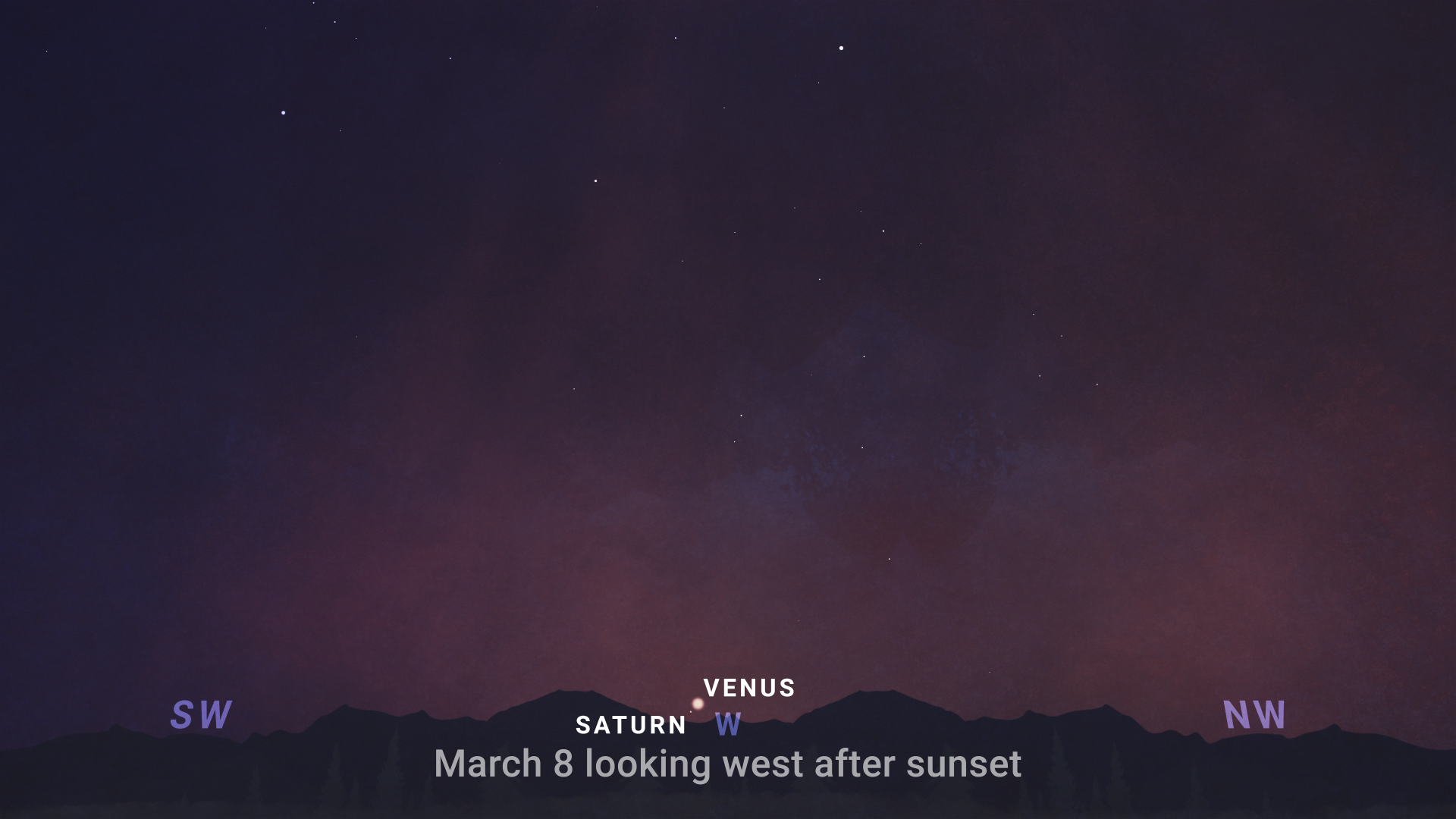
    8 मार्च 2026 को होने वाली शुक्र (Venus) और शनि (Saturn) की प्रमुख खगोलीय युति

    Image Source: https://science.nasa.gov/

    1. घटना का विवरण (Event Overview)

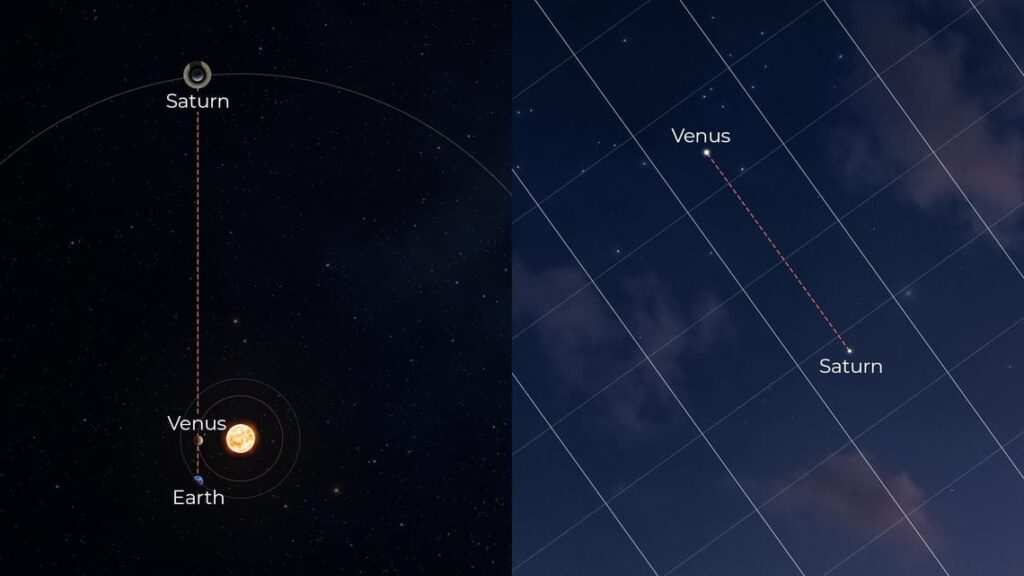
    8 मार्च 2026 की शाम को शुक्र और शनि आकाश में एक-दूसरे के अत्यंत निकट दिखाई देंगे। खगोलीय रूप से, यह युति तब होती है जब दो ग्रह पृथ्वी से देखने पर एक ही ‘राइट असेंशन’ (Right Ascension) साझा करते हैं। हालांकि वे पास दिखाई देंगे, लेकिन वास्तविकता में वे अंतरिक्ष में एक-दूसरे से लगभग एक अरब मील दूर होंगे।

    2. कब और कहां देखें (When and Where to View)

    • समय: यह दृश्य सूर्यास्त के तुरंत बाद सबसे अच्छा दिखाई देगा।
    • दिशा: दर्शकों को पश्चिमी आकाश (Western Horizon) की ओर देखना चाहिए।
    • ऊंचाई (Altitude): यह युति क्षितिज से बहुत नीचे, लगभग 6° से 7° की ऊंचाई पर होगी। इस कम ऊंचाई के कारण, यह महत्वपूर्ण है कि देखने वाली जगह से पश्चिमी क्षितिज बिल्कुल साफ हो और वहां कोई पेड़ या इमारत बाधा न बने।

    3. क्या दिखाई देगा (What Will We See)

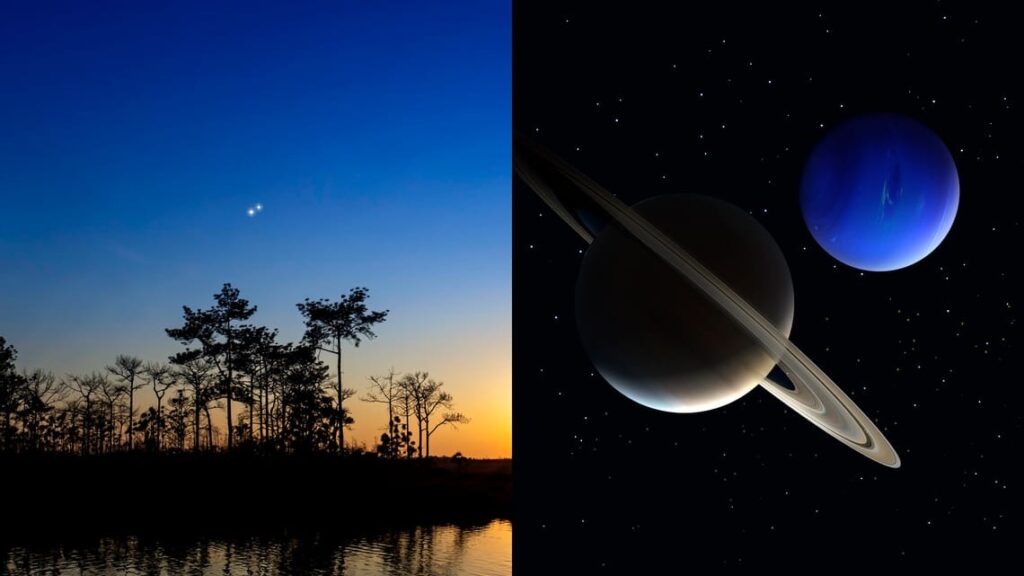
    • ग्रहों की चमक: शुक्र एक अत्यंत चमकीले सफेद “सांध्य तारे” (मैग्निट्यूड -3.8) के रूप में दिखाई देगा। यह शनि (मैग्निट्यूड 1.0) को खोजने के लिए एक मार्गदर्शक के रूप में कार्य करेगा, जो शुक्र के पास थोड़ा कम चमकीला और पीले रंग का दिखाई देगा।
    • कोणीय दूरी (Angular Distance): दोनों ग्रहों के बीच की दूरी लगभग 1 डिग्री होगी। इसे समझने के लिए, यह हाथ फैलाकर देखने पर एक उंगली की चौड़ाई के बराबर होता है।

    Image Source: Astronomy News: Current Astronomy & Stargazing Events | Stargazing Forecast 2026

    4. अवलोकन कैसे करें (How to See)

    • नग्न आंखों से दृश्यता: यह युति नग्न आंखों (naked eye) से आसानी से दिखाई देगी।
    • उपकरण: हालांकि यह आंखों से दिखेगा, लेकिन दूरबीन (Binoculars) या छोटे टेलिस्कोप के उपयोग से शनि के छल्ले और शुक्र के चरणों को बेहतर ढंग से देखा जा सकता है।

    5. फोटोग्राफी कैसे करें (How to Capture)

    इस खगोलीय घटना को कैमरे में कैद करने के लिए निम्नलिखित तकनीकी सुझाव दिए गए हैं:

    • आवश्यक गियर: मैनुअल सेटिंग्स वाला कैमरा (DSLR/Mirrorless) और एक मजबूत ट्रिपॉड (Tripod) अनिवार्य है ताकि लंबी एक्सपोजर के दौरान कैमरा स्थिर रहे।
    • कैमरा सेटिंग्स:
      • कैमरे को Manual mode पर रखें और RAW फॉर्मेट में शूट करें।
      • ISO: 800 से 1600 के बीच रखें।
      • एक्सपोज़र: शुक्र के विवरण के लिए लगभग 1/20 सेकंड और शनि के लिए 1/5 सेकंड का शटर स्पीड उपयोग करें।
    • फोकस: ‘Live View’ का उपयोग करके 10x ज़ूम पर शुक्र जैसे किसी चमकीले बिंदु पर मैन्युअल फोकस करें।
    • उन्नत तकनीक (Lucky Imaging): वायुमंडलीय हलचल से बचने के लिए, एक स्थिर फोटो के बजाय उच्च फ्रेम रेट वाला वीडियो रिकॉर्ड करें और बाद में सॉफ्टवेयर (जैसे Registax या Autostakkert) का उपयोग करके सबसे स्पष्ट फ्रेम को आपस में जोड़ें (stack करें)।
    • रिमोट शटर: कैमरा हिलने से बचाने के लिए रिमोट शटर रिलीज़ या 2-सेकंड के टाइमर का उपयोग करें।

    Image Source: Astronomy News: Current Astronomy & Stargazing Events | Stargazing Forecast 2026