
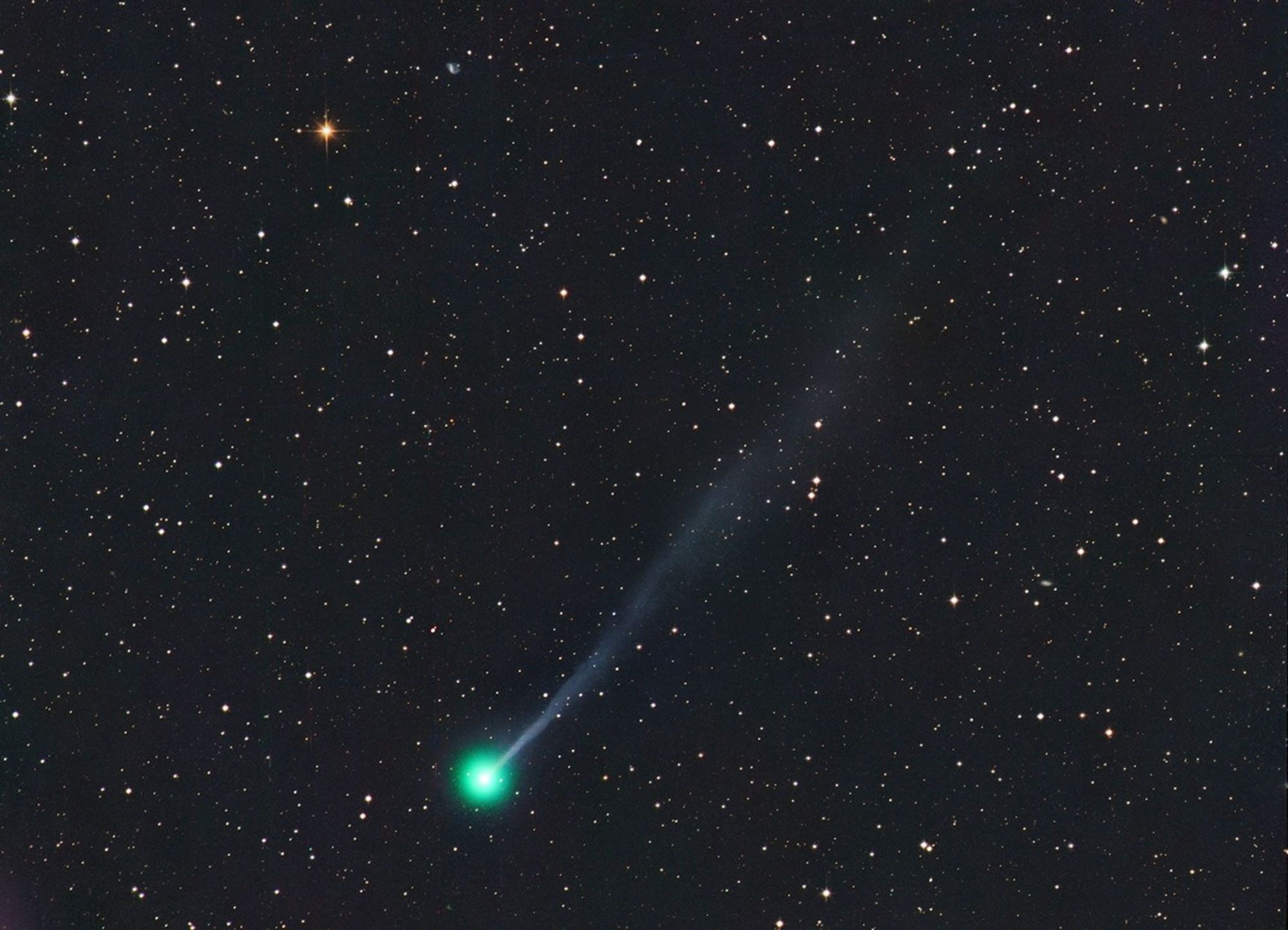
“They are calling it a sungrazer—a comet that passes very near to the Sun and if it survives, may be visible in broad daylight. So, what is the likelihood of Comet C/2026 A1 (MAPS) actually becoming a daylight comet?
☄️ Comet Profile: C/2026 A1 (MAPS)
Credit: Michael Jäger & Gerald Rhemann
Source: NASA
*Reference: Latest observation data via COBS Database (Object 2688).
KOSMIKAI Observation Terminal
Target: C/2026 A1 (MAPS)
HELIOCENTRIC PERSPECTIVE
OPEN JPL ORBIT VIEW 🛰️
NASA Orbit Planner
View from the Sun’s Center. Tracks the 3D trajectory and the “hairpin turn” around the solar core.
OBJECT ID
C/2026 A1 (MAPS)
ENGINE
NASA JPL
TOPOCENTRIC PERSPECTIVE
OPEN SKY-MAP 🔭
Live Sky Tracker
View from Your Location. Essential for actual observation, altitude, and azimuth positioning.
OBJECT ID
C/2026 A1 (MAPS)
ENGINE
THE SKY LIVE
COMET DATA
C/2026 A1 (MAPS)
PREDICTED (NASA)
…
model prediction (not observed)
OBSERVED (LATEST)
7.0

Comet C/2026 A1 (MAPS) – Luminosity Trend
INITIATING NASA DATA LINK…
Source: NASA/JPL SSD
(↑) Higher = Brighter
Observer's Verdict & Forecast
| RATING | ★★★★★ |
| BEST VIEW IN | Southern Hemisphere (Primary), with good location can be visible from the Northern Hemisphere |
| VIEWING REQ. | Binoculars / Unaided Eyes |
| CAPTURING REQ. | Tripod + Long Exposure |
| UNAIDED EYE? | YES (From April 1) Expected |
| VISIBLE IN INDIA | YES (Challenging / Low Horizon) |
Best Viewing Window:
March 28- April 02 & after April 04 (if survives) (after sunset 19:15 - 20:30 IST)
March 28- April 02 & after April 04 (if survives) (after sunset 19:15 - 20:30 IST)
Moon Condition:
Full Moon on April 2. Sky contrast improves significantly after April 5. (Check Moon Phases)
Full Moon on April 2. Sky contrast improves significantly after April 5. (Check Moon Phases)
Prediction by BoltiPhoto:
"Good to observe, but most probably it will disintegrate. Moonlight is also interfering with it before perihelion. If it survives after perihelion, it will give a show to us. Remember, comets are very unpredictable and amazing if they survive the extreme close pass of the sun."
Leave a Reply to चार शौकिया खगोलविदों ने खोजा धूमकेतु Comet C/2026 A1 (MAPS) - KOSMIKAI Cancel reply